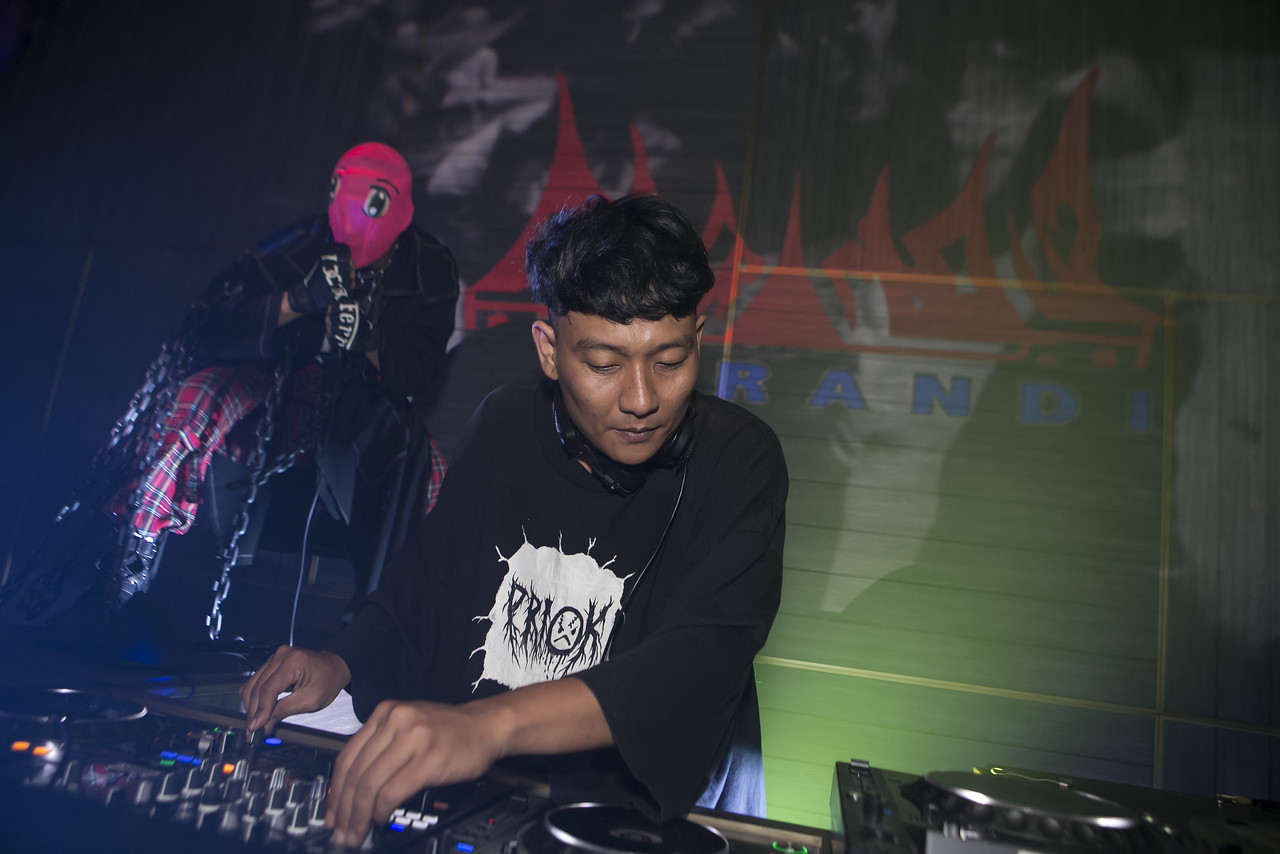
Kasimyn: We’re Gabber Modus Operandi, currently based in Bali. We play…
Ican Harem: 200bpm orgasm club music! That’s our goal.
K: Gabber Modus Operandi explores sonic healing and sarcasm. We want to examine the differences between the sacred, the stupid, and the fun.
Jan Rohlf: Where do these interests come from? Do you both come from punk backgrounds?
K: Yeah, we’re punk musicians, but I had somehow ended up as a house DJ in Bali. I didn’t find that so challenging, and eventually Gabber Modus Operandi started from a discussion we had about what we wanted to do.
IH: We started playing at random punk gigs in the library in Denpasar [the capital of Bali]; it was kind of an accident. The first time we played together was because my partner back in the day cancelled three hours before a gig, so I asked Kas to help me. The answer was yes.
K: We don’t actually have very much gabber stuff, so we just push everything to 200 bpm. And it sounds better. This also emerged from late-night discussions we had about how we work and what we’re interested in – we’re both excited about all of these street improvisations happening across Indonesia. Both of us love jathilan [a traditional ritualistic Indonesian trance dance], but we don’t really appreciate it with the whole traditional outfit. We’re more interested in how it is practised by people on the street.
We love it when kids wearing Sepultura or Rancid t-shirts and Adidas shoes are suddenly doing jathilan. It’s the best crossover.
IH: It’s like mixing subcultures.
JR: Can you explain what jathilan is?
IH: It’s like a trance dance in which a spirit possesses your body – an animal spirit, mostly. It challenges our humanness to become more animal and wild. There are no rules, and it’s filled with really crazy movement. It emerged from a really common Javanese culture. Nowadays a lot of jathilan just happens in the corner of someone’s house, performed by someone in a trance.
JR: So what you do is close to something like contemporary folk culture?
IH: I’m afraid to say »contemporary« and »folk,« actually.
K: We don’t really want to say that we celebrate these things, exactly. We just want to take part in them, somehow. One of our friends actually said, »you have higher education than these guys. Why do you want to be part of this?«
In the end, it’s about jealousy. We have a real jealousy towards people who can genuinely enjoy their culture without all the filters that we have – complaints about the DJ, the outfit, the sound, or the venue. All of these questions bring you out of the experience.
IH: It’s kind of like a rave. These motherfuckers are raving harder than us!
K: There’s no flyer, no lineup, and no main star that you need to wait for. It’s just constant beats and sounds that can suddenly flip and do batshit things without even needing to be categorised by any genre or style. This also applies to the fashion; people wear stuff that is completely unrelated to the jathilan tradition. Someone might wear…
IH: A black metal t-shirt.
K: And the next guy is wearing Yonex – it’s like, »how?!« You wouldn’t see that kind of crowd in the club, at least not in my kind of circle.
JR: I guess that’s what I mean by folk culture – you take what’s available to you in your surroundings, and you make some kind of collage, crafting what’s important to you. What is your process in playing with these elements?
K: We try to set out rules. First, everything needs to be pentatonic, because Indonesian music is based on pentatonic scales. And most of the folk music in Indonesia uses fast bpms. We tried 100bpm and it wasn’t working. So we looked at traditional music and realised it is all very fast. Some part of us, our inner demons or something, just isn’t sparked by 100 or 120 bpm stuff, by balearic house music, or chill-out.
So the rules are that we start at 200 bpm, use pentatonic scales only, and use certain sounds that replicate things from the past, like the trumpet. The beat is kind of constant, but we make it sound like it’s on steroids through digital sound effects. And Ican provides provocations as the MC.
IH: It’s more demonic. If you see our folk culture, there’s always something like a handshake with a demon. That’s the point. I love that part.
We’ve been influenced a lot by stuff like Senyawa, who opened up so many new pathways for Indonesian music.
K: It’s so weird that we got to release on Yes No Wave Music – the same label as Senyawa.
There’s this post-Senyawa Indo stuff happening now, which has inspired a lot of people who have realised, »it’s ok to be Indonesian!« It’s ok to produce sounds that don’t sound like Miami or Berlin. They proved that we can be accepting of it.
There’s a big identity crisis for Indonesian kids, maybe even Southeast Asian kids. When people say »underground,« it’s always referring to stuff from the outside world – in hip hop it’s about »oh, are you playing in a Brooklyn style, or West Coast style?« Or some techno guy will claim to play Berlin style...
JR: You want to find something – or maybe you’ve already found it – something that expresses what Indonesia is for you?
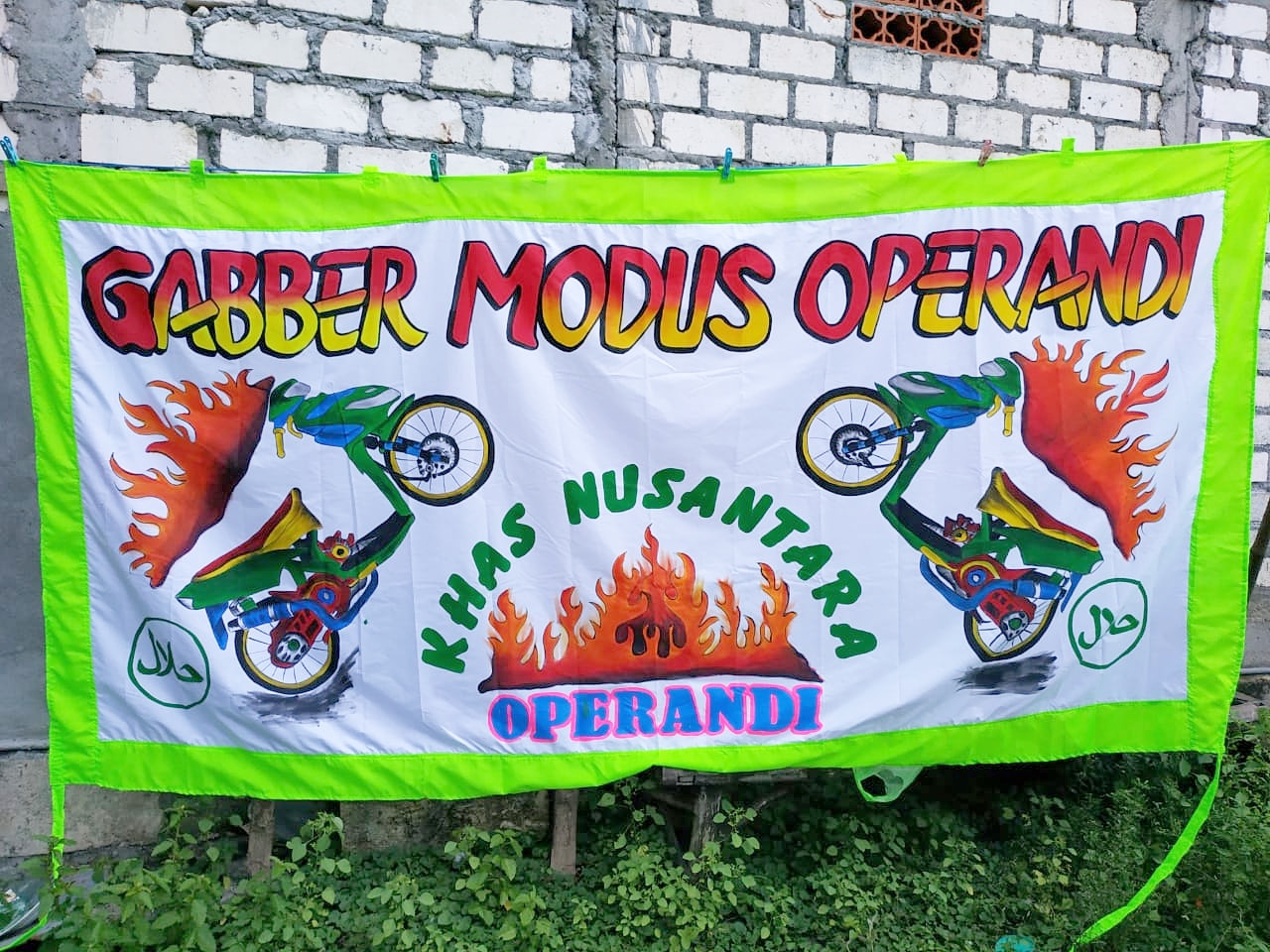
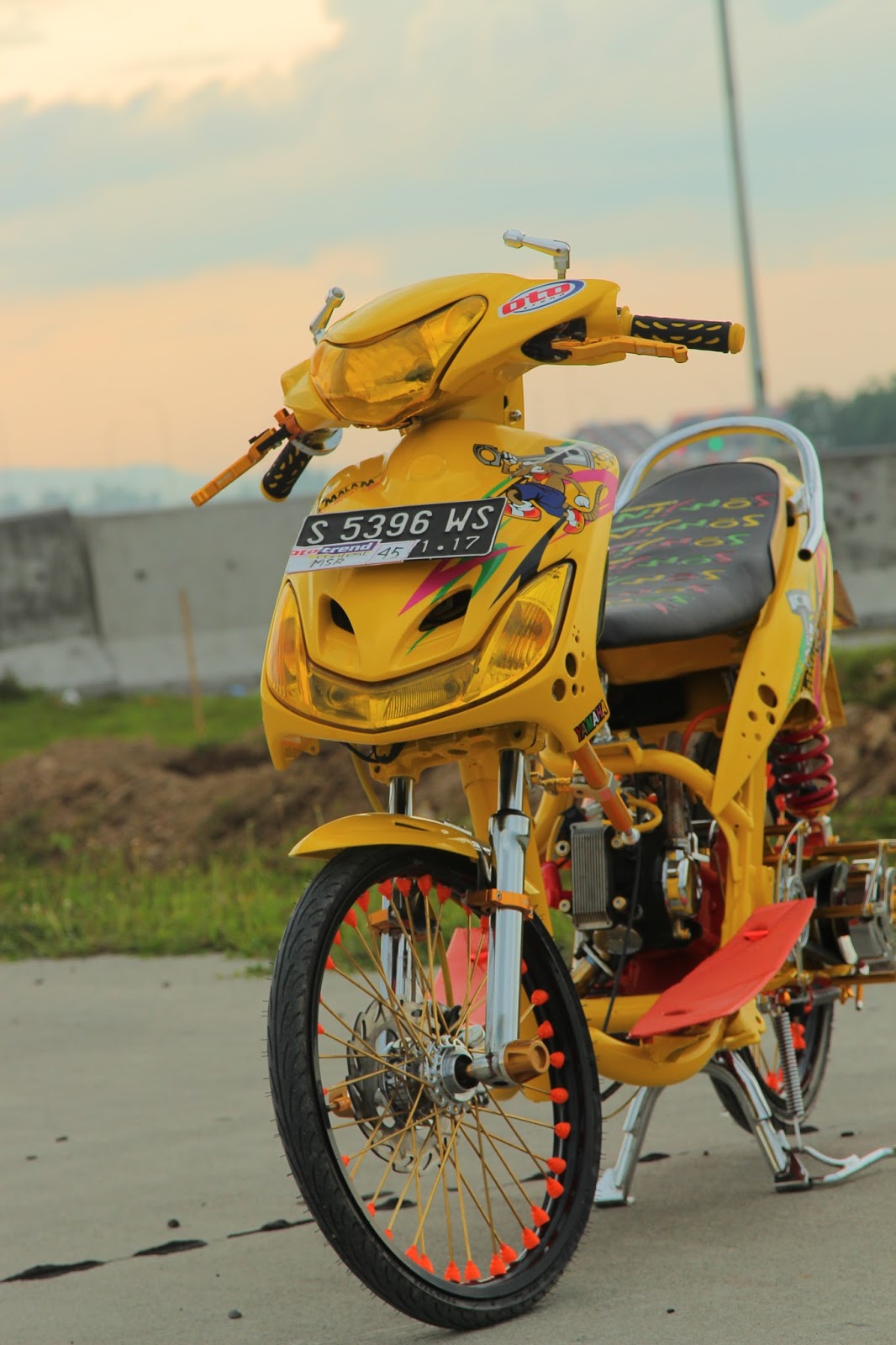
K: Yeah, these elements of contemporary Indonesian culture are right there. They’re all around us – we just usually don’t think about them, and don’t recognise them. For example, some kids street race. They use regular 100cc scooters, basically a mum’s scooter, since that’s all they can afford. They are boosting them, cranking them up to really demonic speeds. The best part is that they decorate them; it’s just mind-blowing. They might use patterns like those seen on fabrics on buffalos at Karapan Sapi [a traditional bull racing festival on the island of Madura], but they carve them into the bike, like on a Kris [a traditional dagger that might be a weapon or a spiritual object]. Maybe they started copying Japanese styles, but then realised, »oh, we’re Indonesian, we love to carve things,« and they end up creating these weirdly decorated neon and chrome bikes. These street improvisations are one of our main inspirations.
JR: What I admire about all of that stuff is that people are creating their own worlds – their own means of expression. They take from many sources, of course, but then transform it and make it their own.
IH: It’s like a cultural orgy.
JR: You definitely seem most fascinated by anything that’s strong, brazen, outrageous, and crazy.
IH: I guess that’s because Bali tends to present softer sounds, like bikini music or koplo house.
K: It’s touristy, we need to feed the tourist pocket. There’s this thing called »ketimuran,« which is meant to describe an Eastern mentality. People who talk like that don’t actually know what the fuck’s happening in the East. There’s a lot of violence, certainly sonically – if jathilan was played on a proper sound system, then I think it would be more intense than any other sound. But they just have this crap stuff, like what you have for weddings, and with that it’s already very intense. If one of the jathilan groups played on a club system, it would destroy everything.
There’s this new trend around DIY sound culture happening across central to east Java, where people make their own sound systems, load a stack of speakers onto a truck, and just blast them.
IH: They meet and blast their big sound systems. The day before Idul Fitri [an Islamic holiday that marks the end of Ramadan], all of these sound systems come to this one field and battle, blasting »Allahu Akbar« and »bang bang bang, ddrrrrang…« It’s like a blessing – Islamic culture, but with monstrous DIY sound systems and dangdut [the most widespread pop music in Indonesia, with roots in local musical traditions].
K: There’s definitely a hunger for loudness. I asked one of the people involved, »what is the main goal?« The answer was, »if we see a neighbor’s window broken, that’s enough.« I thought that was amazing, I love these small, genuine goals.
JR: Could you speak a bit more about this contrast? There is this stereotype of politeness, on the one hand, that is projected as an »official« image, while on the other, there is all this anarchic street culture that often seems rather rough and disturbing – at least from the outside. Do you think that tension is not expressed enough?
K: I don’t think there’s much of a discussion about this, really. But I think Indonesia is a country that’s dealt with a lot of catastrophe. Historically, there’s Krakatoa, the volcano that erupted and killed half the population. Then there was the 2004 tsunami which killed an estimated 160,000. So death is really close; it’s always with us. And yet, in this dangerous place, where you could die at any time, there is also an abundance of resources. A lot of food, energy, and minerals. I think that’s what creates this contrast, but that’s just my personal gut feeling.
JR: And do you find this contrast and tension expressed in the current versions of jathilan, and in other popular youth cultures like punk, metal, gabber, etc.? Is Gabber Modus Operandi somehow your way of navigating this?
IH: It sucks when people see us and think, »oh they’re Indonesian guys, so they’re polite.« I don’t agree with stuff like that. I mean, I grew up in a really Islamic environment. When I found music, it became my way of reclaiming myself. The motherfucker is dangerous now – I think that’s the source of the power and that is my manifesto.
K: I think this gets assigned both ways. What’s projected onto us by outsiders? I think we still feel colonised – there are still so many whitening products. Just recently, a couple of clubs in Bali enacted policies that state if you’re local you need to pay, and if you’re foreign, you don’t. And it’s just acceptable – it’s not seen as racist.
The way we see ourselves, it seems like there’s a lot of inverted racism. It’s chaotic. Colonisation isn’t over, though that also depends on which colony you’re in. Malaysia was colonised by the British and they have some kind of pride there, as opposed to if you’re in a former Dutch colony, you’re kind of fucked. If you’re Vietnamese, at least you have this nice French cuisine...
IH: It’s funny ‘cause gabber is so big in the Netherlands [laughs].
K: Maybe the Netherlands got it from jathilan! Maybe some Dutch guy was like »I recorded some shit from some village in Java, let’s crank it up loads.« [Laughs]
JR: How did you get into gabber, hardcore, and similar sounds?
IH: I guess it started from funkot. Funkot is really similar to happy hardcore in Europe, but based on different rhythm styles and bass lines that are closer to dangdut. I only recently started listening to gabber when a friend of mine from France told me that our funkot really sounds like these Thunderdome records. And when I listen to this stuff, I was like, yeah, this is actually really similar to funkot. I used to be really into psytrance, but Kas wasn’t. He said, fuck, we need gabber. Its energy is much more evil.
K: But also we’re influenced a lot by footwork – we grew up hearing a lot of percussive sounds. It’s familiar. Ultimately, we don’t really know if we play gabber…
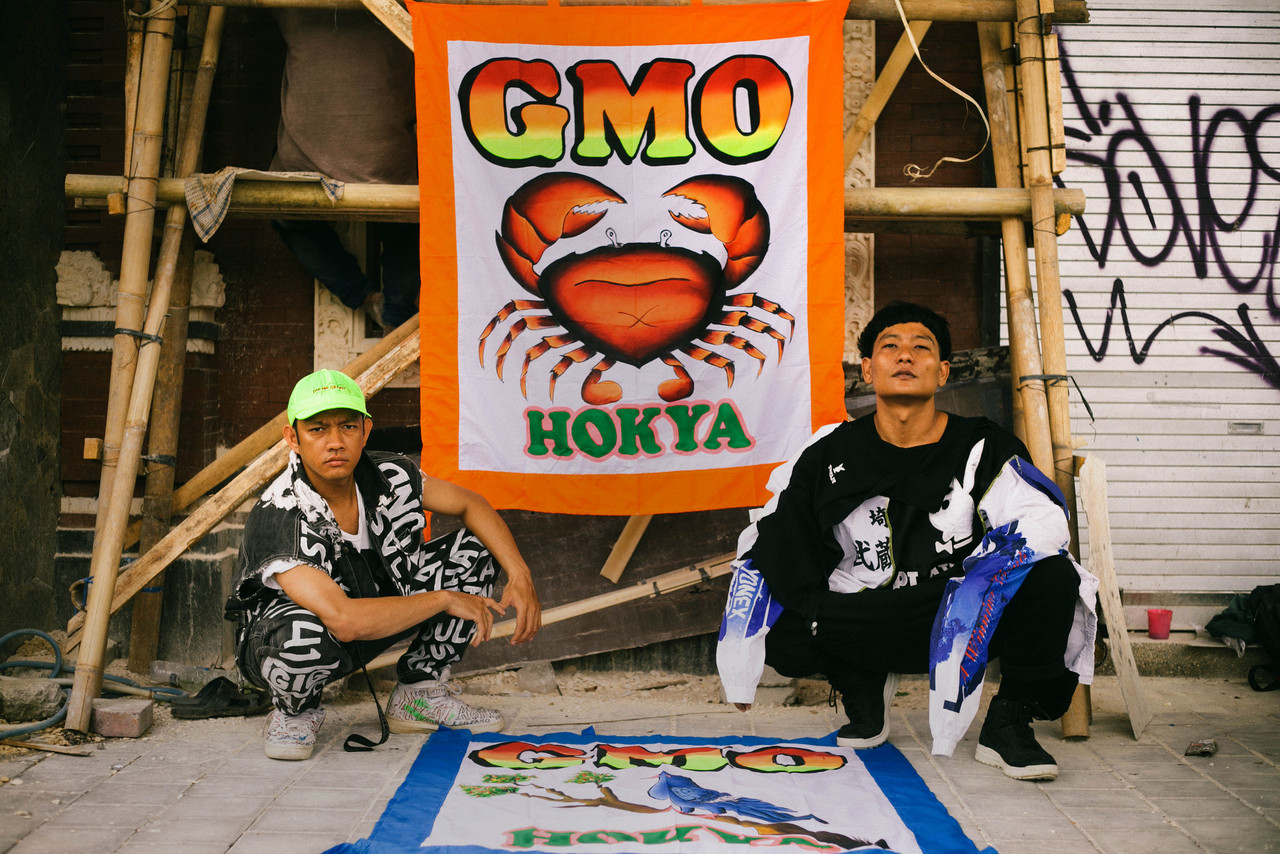
IH: The name »Gabber« is kind of a joke. We’re mocking this seminal Yogyakarta new media art collective from the 90s; they called themselves Geber Modus Operandi.
K: They were really important for the development of underground new media arts in Indonesia.
IH: When we were making fun of it, it became Gabber Modus.
JR: How are things for you in Bali? Do you feel like mavericks, or is there a group of like-minded people around you – a scene of artists making fast, energetic music?
K: It’s tricky in Bali. Each region of Indonesia has its own style. In Bali, we have genjek, then you have koplo. There are different sounds and functions, but they all carry the same intensity. And then there is pop Bali. So there’s Balinese pop music that started in the 80s and 90s, but there’s also hardcore, the koplo version of Bali.
Is what we’re doing new? For sure, but that’s also a tricky answer. When people talk about music in Bali, it’s usually about the clubs in the touristy area in the South. But there is also the North; places like Singaraja play a lot of funkot – it’s on its way to gabber, but they don’t know of that connection yet. It’s kind of like breakbeat dangdut, though it’s like gabber to me – it is 200 bpm.
IH: Honestly, I never go to funkot clubs in the north of Bali. We’re too »South.« For us it’s too dangerous; we are too soft for them. That’s partially why jealousy has been building in us – we always end up hanging out with and pleasing the tourists. Some of the gigs are changing right now, especially in Denpasar, where there’s punk and underground and death metal. The noise scene is growing, Bali is quite late for sure in comparison to Java’s scene.
K: There’s a lot of experimentation in Bali. There’s a guy who makes this weird, synth pop stuff, but at the same time there are a few amazing composers, like Dewa Alit, Wayan Gde Yudane, or Made Subandi. I once saw Yudane put a massive angle grinder to a giant gong, it was next level stuff! Or Dewa Alit, who, for example, created a piece for 9 performers, playing with the aftersounds of gamelan with different tunings.
This doesn’t really suit the tourists. It is not like this could officially represent »Indonesian culture,« so they don’t really want to deal with Jakarta. You need the approval of [the Ministry of Culture in] Jakarta to represent Indonesia. So it’s mostly DIY, but now they’ve gotten their own funding. Dewa Alit is now at MIT [in Boston, USA]. Yudane did a project in New Zealand. So personally, I think experimental music from Bali is more established outside of Bali. They could not really spread their ideas in Bali, because it falls in a sensitive area between the cultural norm and the traditional kind of stuff.
But one of the reasons why we love Bali so much is that it’s one of the places that still lives with music. There’s a social system called Banjar [social groups that host community meetings, sports, dance, and music at places they run, which are known as Bale Banjar], each of which brings hundreds of people together to play gamelan.
IH: Don’t forget to mention the techno banjar! Before the silence day [Nyepi day, which is part of the New Year celebrations according to the Balinese calendar – a day of silence, fasting, and meditation, where all routine activities come to a complete halt], all the kids just hang out and get drunk in the banjar and they play really loud funkot all night long. They make their own rave, you know? It makes us jealous.
K: It’s impossible to say there’s no experimentation in Bali. I’d say 80% of Bali is playing gamelan; pentatonic music is in their breath. There’s this band we really love called Aardvark – they’re kind of like math rock. But the way the drummer plays, it’s like gamelan. They think they’re playing metal, but they aren’t; the composition is more like gamelan than metal. That’s why I am saying it’s tricky. The cultural environment is bending the music.
Gabber Modus Operandi's »Padang Galaxxx« from album <em>HOXXXYA</em>.
Label: <a href="https://svbkvlt.bandcamp.com" targhet=blank>SVBKVLT</a>, 2019.
Gabber Modus Operandi's »Padang Galaxxx« from album <em>HOXXXYA</em>.
Label: <a href="https://svbkvlt.bandcamp.com" targhet=blank>SVBKVLT</a>, 2019.
JR: Bali isn’t majority Muslim. Is this one of the reasons why there is a more liberal club culture in Bali?
K: Yes. It’s even become a gay refuge. If you are gay, you’d get persecuted in Java, so you need to run away to Bali.
JR: And this environment also brings about different music?
K: Yes, it’s on its way. There is a fetish of being really stuck in one genre – it’s always punk or metal. I think it’s related to how society works there; a small caste system still exists. It’s not »official,« but people still look at you differently depending on your name. Now it’s slowly starting to dissipate, and there are some amazing musicians crossing castes.
IH: People used to only visit Bali as a pleasure place – it was kind of the end of hippie trails from India. But now we found techno people, and broader cultural discussions. It’s not just people finding spirituality or being surfers, and we’ve been influenced a lot by that. Now, there are other reasons to come to Bali.
JR: You said the funkot parties are too dangerous – what would happen if you played there?
IH: I guess they would accept what we do for sure, and they’d maybe even be kind of happy. But they’re really sexist. We’re too soft to hear that.
K: There is a strong gang mentality, too. You bump into one and you have to mess with the whole gang.
IH: If we agreed to play somewhere, I guess the club would be kind of happy about it. But for the average person going to funkot clubs, if you aren’t a foreigner, it’s another story.
K: They also serve cheap booze, and I don’t think we could handle those substances. We’re not young enough anymore to handle that shit.
We kind of obsess over soundsystem culture. One of our goals is to play on top of one of those trucks we mentioned earlier. Blasting things like that appeals more to us than a funkot club.