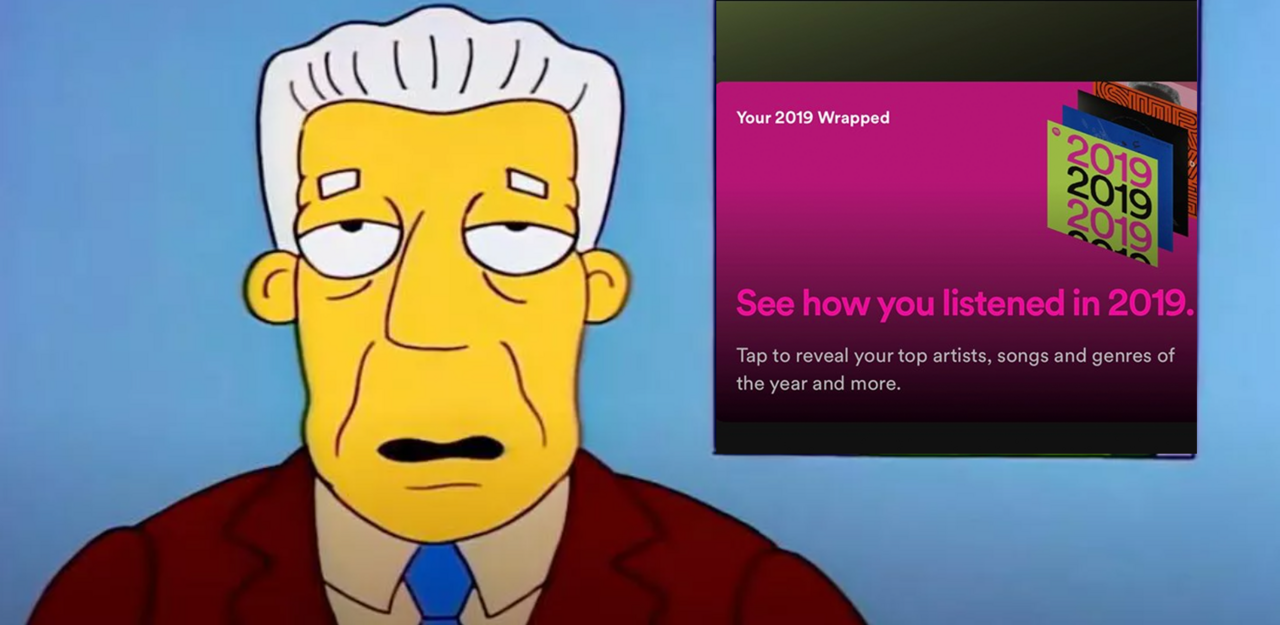
There’s plenty of evidence out there: frustrated Twitter threads, reluctant tidbits dropped in interviews, and a plethora of idealistic music-blockchain projects that aim to »fix« music. The more time I spend in Berlin and in the »music scene,« the more traces I uncover of dissatisfaction and resignation.
In the past year, artists have begged for likes and the support of fire emojis online; numerous threads criticised the perfunctory gestures of superficial music journalism; a number of pop stars lamented today’s industry pressures to be visible; beef was had with Instagram/Facebook/Twitter dependence; despair at corporate reliance was expressed; and countless off-the-record admissions were made, stating that x phenomenon in the music industry isn’t working, but is a necessary evil.
What resigns us? A fear of being left behind, or an incessant pressure to excel? A masochistic drive? Or, more likely, a widespread apathy resultant from rampant individualisation?
Swirling in a toilet bowl of our apparent collective apathy are our anxieties, smartphones, corporate reliances, and social media habits.
This brings up more questions: what is to be done? Will another piece critiquing social media convince anyone to leave a platform? Will another rant against the reliance on [insert corporation] in music help?
An economic system that persistently says »never enough« is, unsurprisingly, not the ideal climate for art, creativity, sharing, or joy. If neoliberalism »seeks to bring all human interaction into the domain of the market,«3 then music, along with the rest of us, is in a troublesome situation. A medium that cannot be quantified or have its value reduced to metrics ends up pushing against a bizarre industry that makes »an attempt to crudely quantify…affective contributions.«4 Placing »affective, as well as productive« demands on artists, promoters, publishers, writers, listeners, and everyone else in between are the pressures and mechanisms of PR and promotion in the age of platform capitalism.
These attempts at measuring forms of labour »which, by their nature, are resistant to quantification«10 cultivates a cultural dynamic in which representation seems to weigh more than actuality – music dissolves into gesture.
It becomes common practice to book artists with certain follower counts. A good press release is reiterated time and time again, and comes to define an album or artist. Corporate platforms with beyond-dubious operations come to dictate the way we think about and discover art.
The conviction that we in music are motivated not primarily out of financial interest but also out of love has long been considered a common foundation of independent (music) cultures. As we navigate the shifting ways in which technology shapes our lives, what it means to have agency or to be independent becomes increasingly contested.
To preserve and insist on the value of what we do is a necessary and difficult task. We continually trust centralised, investor-owned platforms; »[w]ithout thinking, we have passed vast swathes of music culture to the whims of capital, and distributed it through channels with a single point of failure.«11 As we swim through a culture that places more value on representation than being, we are also in danger of pursuing a politics (or wokeness) that only »register[s] at the level of (PR) appearance.«12
In 2007, Facebook announced Beacon, a system that lets users broadcast recent activities and purchases. It was also accompanied by the Facebook Page, which was touted as a new way for consumers to engage with businesses and heralded as »a new era for advertising.«13 The ubiquitous Facebook Page is now one of the presiding methods via which artists share their work and make a name for themselves. In 2015, these Pages were »empower[ed]«14 to connect with users/consumers via direct messaging. Meanwhile, the behemoth acquired Instagram in 2012 and WhatsApp in 2014, thereby playing a dangerously large role in our networked world, and reshaping many music industry norms.
2008 saw the launch of Spotify, another investor-owned platform that rewired the music industry, promising »Music for Everyone.« While espousing this seemingly egalitarian sentiment, Spotify has come under fire for failing to properly compensate musicians, for fostering a new strain of Muzak, exacerbating sexism in music, and threatening the art form itself through cultivating homogeny. The list of dubious activities goes on, yet in 2018, it was reported that their user base had ballooned to 180 million monthly users globally. For all the reports of it »saving« the music industry, lesser known artists (and those who don’t make it onto playlists) continue to receive paltry payments.
These corporate monoliths undoubtedly do not rule the music industry alone, but given their gargantuan roles, sketch out a picture of where we’re at today. Facebook and Instagram have become dominant sites of communication and promotion; meanwhile the rise of Spotify and similar services normalises passive listening and inequitable streaming across the board.
Our shared reliance on corporate platforms is to the detriment of the entire ecosystem. Even in the arts, there doesn’t seem to be space for a creative gesture outside the homogenising forces of persistent press cycles, relentless (re)posting, and PR.
All of this paints a fairly dire picture, which probably doesn’t come as a surprise. But what does is the supposed »radical« underground’s acquiescence to and acceptance of these phenomena. For all the talk of politics on the dancefloor, there seems to be a substantial oversight here.
People will posit that it’s a privilege to leave or abstain from any major platform, and rightfully so – but perhaps that makes it all the more important to. The few who refrain from social media promotion are likely already established, with careers that blossomed a few years earlier. Those who have the option to decline suspect programmes and services likely need financial security to do so. Yet even then, it seems the desire for individual »success,« relevance, or popularity often eclipses whatever hazy benefits abstinence or refusal might eventually give rise to. But surely any kind of progress is dependent on those who have the capacity and means to move to do so.
Despite its apparent visibility, the underground music world has suffered on many fronts over the last decade. It not only lacks viable economic models, but also faces neoliberalism’s weighty demands in the forms of maximum efficiency, affective labour, and constant visibility. In a landscape where music is content, and content is free; when many can’t afford to pay, and many don’t want to, it becomes more difficult than ever to build a healthy arts scene that isn’t run by and for those who are independently wealthy. After the era of the work of art in the age of digital piracy, what is left to do?
20 years ago, many of these professionalised industry practices weren’t standard in the worlds of experimental/underground electronic music. It was enough to do the thing, without having to gesture about, sensationalise, create hype around, and insist that the thing was great; the thing was often enough. This isn’t posited in an effort to convey a boring, unhelpful nostalgia for »better days,« but instead to further sketch out the vastly different context in which we’re operating today.
The worlds of underground, experimental, and club music have changed drastically in the last couple of decades. As we entered the age of surveillance capitalism, the role and world of music have seen multiple paradigm shifts.
Reliances on centralised platforms that operate in the interests of capital quash our collective ability to imagine otherwise. Resigned, we participate in the very same structures that are funneling revenue away from the arts, undercutting individual agency, and furthering our joint dependency on them. Our shared reliance siphons revenue away from those who need it, demanding grand amounts of affective labour and undercutting individual user agency. Music consumption is not just an economy in its own right, but also an opportunity to produce data that can be exploited via other means. Streaming has continued the custom of sharing music for (nearly) free – often without direct affiliation or engagement with the artist or the culture that the music is a part of. While making music available for free can also be a conscious strategy of artists to flatten economic disparities and to connect to listeners, this only works if their engagement is reciprocated. Gargantuan platforms – and, of course, technologies like smart speakers that are designed to foster passive listening – often strip music of these contexts and intents. They thereby risk homogenising and diluting music into play-hungry background Muzak.19 Independent promoters, publishers, artists, and so on all suffer as a result.
A number of efforts have thankfully been undertaken to imagine better structures, platforms, and means of connecting to/sharing with one another, both in-and outside of music. From new economic models for creators of all stripes, such as those conceived by sustainable journalism initiative Civil20 and browser Brave,21 to Cryptorave’s pursuance of autonomy on dancefloors in an age of digital capitalism and db’s22 proposition as a small, user-owned platform, several noteworthy developments are taking place in these conversations and their peripheries. Off the back of the platform co-op movement, crypto boom, and social media dissatisfactions, it appears that in order to be effective, efforts need to span an array of conversations and ideas. While this conversation is sometimes framed as a question of whether we need new technical solutions or whether we need to change our attitudes and approaches, maybe we ought to sidestep this false dichotomy and acknowledge that platform design is an ideological problem, and that our practices are dependent on them.
So far, efforts don’t seem like enough. There’s still plenty of resignation, dismissal, flat-out critique, and anger. Perhaps an effective approach (and thus a responsibility of all who desire alternatives) may be to keep searching for and working towards these strategies, in ways however small. If we are going to draw so frequently on a term like intersectionality, let’s consider how our varied practices can enact that. Acts of protesting dubious platforms and contributing to the development of better ones can be called what they are – practices that are at once anti-capitalist, anti-racist, feminist, collective, and so on.
How might we step outside of our collective tunnel vision and consider what a better, healthier, more joyful cultural ecosystem might look like? How might we find or create wiggle room in an industry that appears hopelessly bound to the whim of investor-owned platforms that do not have our shared interests at heart? How might we foster an empathetic politics, and challenge the ways in which we assign value to our work?
If we want to cultivate a music ecosystem that doesn’t just persist but maybe even thrives, perhaps we need to reconsider our roles within and contributions to it. To combat the harmful effects of our existing habits, it seems we must begin to shift our approach. A helpful beginning may lie in allowing collectivity, generosity, and joy to weigh more than appearance, and in interrogating what it is to be »successful.« In the face of questions thrown up by »persistence,« maybe we can find hope in turning to collaborators both in- and outside of music to collectively imagine better platforms, infrastructures, and practices.
- 1
David Harvey, A Brief History of Neoliberalism (New York: Oxford University Press, 2005), p.3.
- 2
Mark Fisher, Capitalist Realism, p. 39.
- 3
David Harvey, A Brief History of Neoliberalism (New York: Oxford University Press, 2005), p.3.
- 4
Mark Fisher, Capitalist Realism, p. 39.
- 5
Mark Fisher, Capitalist Realism, p. 42.
- 6
Josh Hall, »Towards a Distributed Culture,« Rewire Festival Magazine (2018).
- 7
Mark Fisher, Capitalist Realism, p. 43.
- 8
Rob Hof, »Facebook Declares New Era for Advertising,« 6. November 2007, Bloomberg.
- 9
Josh Constine, »Facebook Empowers Pages To Provide Customer Support Over Private Messages,« 5 August 2015, TechCrunch.
- 10
Mark Fisher, Capitalist Realism, p. 42.
- 11
Josh Hall, »Towards a Distributed Culture,« Rewire Festival Magazine (2018).
- 12
Mark Fisher, Capitalist Realism, p. 43.
- 13
Rob Hof, »Facebook Declares New Era for Advertising,« 6. November 2007, Bloomberg.
- 14
Josh Constine, »Facebook Empowers Pages To Provide Customer Support Over Private Messages,« 5 August 2015, TechCrunch.
- 15
See: Liz Pelly’s »The Problem With Muzak,« December 2017, The Baffler.
- 16
A community-owned journalism platform prioritising transparency and economic sustainability. Learn more at civil.co.
- 17
Which uses micro-payments to propose a new, seamless remuneration model for content creators online.
- 18
db is a co-operatively owned platform and experiment in peer-to-peer broadcasting; find out more at broad-cast.sh.
- 19
See: Liz Pelly’s »The Problem With Muzak,« December 2017, The Baffler.
- 20
A community-owned journalism platform prioritising transparency and economic sustainability. Learn more at civil.co.
- 21
Which uses micro-payments to propose a new, seamless remuneration model for content creators online.
- 22
db is a co-operatively owned platform and experiment in peer-to-peer broadcasting; find out more at broad-cast.sh.