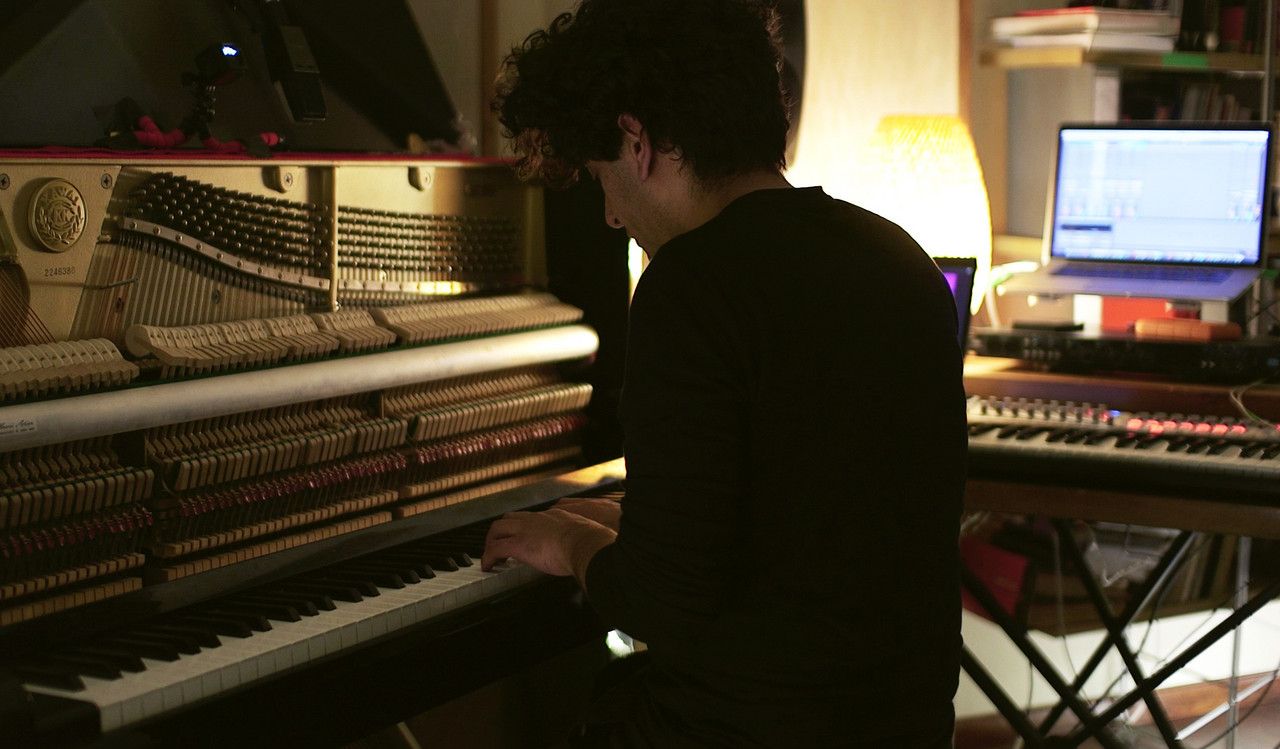
Persistence is a powerful word. It implies a sense of arduous effort – taken to go against the tide. To be insistent, to go on resolutely in spite of opposition. It is markedly different from the idea of perseverance, which implies a sense of focus and determination in one’s continuation but doesn’t really communicate the effort involved.
I used to consider myself perseverant, but only when I started writing this article did I realise that I was actually persistent. I don’t consider myself to be someone who has achieved a lot, especially not when it comes to musical output. But what I have managed, both musical and extra-musical, has taken a lot of effort. Going against the tide, and for so long, has been draining – so much so that it became normalised and embodied to the point of a serious burnout that took around two years of recovery. Much of this is personal and due to my history, but much of it is also musical and therefore inseparable from life itself.
One of these avenues of persistence is closely related to the subject of microtonality and tuning systems. Over the last couple of years I’ve been experimenting a lot and developing Comma, a microtonal tuning Max4Live patch designed by me and programmed in Max in two stages – first by Charles Matthews in London and then by John Eichenseer in California. It is the epitome of my musical persistence to date.
I spent the majority of my adolescent years listening to rock music and learning how to play guitar, bass, and drums by ear. I would record songs from the radio onto cassette tapes and sit next to the rewind button with a guitar in hand. It was incredibly satisfying and so much fun to figure things out and be able to play what was coming out of the speakers – they could do it, and so could I. The seed of DIY and punk rock ethics was firmly planted.
That was until I discovered Soundgarden and Sonic Youth. They used alternative tunings for their guitars which were almost impossible to figure out, and so I had to rely on guitar magazines and tablature to understand what was going on. Here it stopped being fun, but it remained fascinating, and so I continued searching.
When I started discovering Arabic, Indian, and Azerbaijani music around the turn of the millennium, I hit a wall again. I was frustrated that I couldn’t get my guitar to sound right when trying to play some of the melodies. I was sure I had the right notes, but they didn’t feel right. I would spend hours checking the tuning and bending my strings whilst playing, thinking something wasn’t as it should be.
In the following years my interests grew. As I did more research, I rediscovered the oud and its highly revered position throughout the Middle East and North Africa as the instrument of choice for theorists, philosophers, musicians, and composers. In April 2004, I decided to start studying it and began weekly private classes with Iraqi oud maestro Ehsan Emam in London.
In June 2004 – thanks to the influence of Trey Spruance’s epic band the Secret Chiefs 3 and the Web of Mimicry’s online forum community – I placed an order for Harmonies of Heaven and Earth: Mysticism in Music from Antiquity to the Avant-Garde by Joscelyn Godwin. The book soon arrived and I was captivated: tuning systems, mathematics, ratios, fractions, string lengths, monochords, the harmonic series, the zodiac, the planets, Pythagoras, the harmony of the spheres, the Greeks, the Arabs, the Enlightenment – it seemed endless. Wild and fantastical theories about sound, the universe, and music’s place in it, not merely as entertainment, but as an alchemical mirror reflecting the depths of ourselves (our »self«) and the entire cosmos (the universe as an embodiment of order and harmony).
At that moment, something clicked between the unspoken spiritual philosophy of taqāsim (Arab-Ottoman improvisations), the tunings of the maqāmat (Arab-Ottoman modes), and the reverence of the oud as the king of all instruments.
This time, I had to really persist; the oud is a fretless instrument and takes at least 6 months to a year of practice before it becomes even remotely enjoyable to play. But once I got the hang of it, I could finally sit next to the computer and play music (by now it was mp3s) with my mouse and oud in hand and start to try figuring out those evasive melodies which had caused me so much trouble.
I ended up dedicating the next seven years to studying the oud intensively. Fretlessness is a beautiful thing.
Tunings, Temperaments, Microtonality, Intervals, Scales, Modes…
The topic of tuning systems is complex and confusing, partly because it is mathematical and goes back at least 2500 years, but mostly because the internet is full of unreliable and unsubstantiated information. It is essentially the mathematics of music and therefore highly theoretical, with lots of words and numbers and very few attempts to practically elucidate any theories or discussions.
For those who aren’t so microtonally inclined, here’s a quick rundown of terminology:
- A tuning system is a mathematically derived series of pitches used in composition and performance, i.e. just intonation.
- A temperament is the modification of a tuning system, i.e. quarter-comma-meantone.
- An interval is the distance between two pitches of a tuning system, i.e. a perfect fifth
- An octave is a distance between two pitches at a ratio of 2:1, whereby the second pitch is exactly a double of the first pitch’s frequency, i.e. the octave of 200hz is 400hz. The same applies, albeit mirrored, when thinking of an octave below, i.e. 200hz and 100hz.
- A cent is the logarithmic unit of measurement used for musical intervals. It was invented in 1875 by the English Mathematician Alexander J. Ellis and defines the octave as a distance of 1200 cents and an equal-tempered semitone as 100 cents.
- Microtonality refers to the use of intervals of less than an equal-tempered semitone, i.e. a quarter-tone (50 cents).
- A scale is a series of pitches selected from a given tuning system, i.e. C Major.
- A mode is a series of pitches selected from a tuning system that have a specific musical character, expressed through micro-melodies and central tones highlighting specific interval relationships, i.e. the ancient Greek Lydian mode.
- A degree is one of the selected pitches in the scale or mode, i.e. the sixth.
The majority of tuning systems throughout history have relied on the division of the octave into a defined number of parts. These are referred to as octave-repeating tuning systems. Some modern tuning systems disregard the octave altogether (i.e. Bohlen-Pierce scale).
The foundations of most tuning systems were discovered by Greek philosopher and mathematician Pythagoras in the 6th century BCE. The Pythagorean tuning system uses mathematical ratios, more specifically, ratios that can be obtained from the musical tetractys: 1, 2, 3, 4.5 The ratios are relations of string lengths and intervals: 2:1 to the octave; 3:2 to the fifth, and 4:3 to the fourth.
Almost all tuning systems since Pythagoras use the mathematics of ratios. It is generally considered that the larger their numbers, the less pure the resulting sound, hence the reverence of the ratios 2:1 (octave), 3:2 (fifth) and 4:3 (fourth) as pure, universal, and in harmony with nature.
Today, 2600+ years later, the most pervasive tuning system used in the world is usually referred to as equal temperament (ET), also known as twelve-tone equal temperament (12-TET), or twelve equal divisions of the octave (12-EDO). It is named as such because it equally tempers, i.e. adjusts into equal parts, preceding historical tuning systems such as the Pythagorean or just intonation (another tuning system based on simple ratios). None of its intervals are simple ratios.
Although considered a »Western« tuning system, the earliest historical mention of it is found in China as far back as the 5th century.6 Outside China, the first mathematical description of a 12-tone chromatic scale is found in a treatise by the 9th century Iraqi philosopher, mathematician, and musician Ishaq Al-Kindi (d. Baghdad c. 874).7
Before ET, all the notes on keyboard, wind, fretted, or hammered acoustic instruments had to be tuned to a specific tuning system in a chosen key. Wind instruments were another ballgame. Fretless instruments, such as the violin or the oud, did not have the same trouble because the musician can adjust their intonation accordingly.
ET was assimilated into Anglo-European music in the 18th century for the specific purposes of enabling compositional modulations into distant key signatures without sounding »out of tune,« and to allow the transposition of any composition into any key signature, without having to re-tune the instrument every time.
Contrary to popular misconception, ET was not favoured amongst all musicians and composers at the time. It was in fact a niche tuning system, necessary for specific types of compositions that used extensive and, for the time, experimental modulations.8 Essentially, it was a practical solution to a very specific musical problem, for a specific set of musical instruments, in a specific genre of music. But we have been stuck with it for over 200 years, and it has taken over (almost) everything.
Today, ET is the default system for all fixed-tuning Western instruments (piano, guitar, most wind instruments, etc.), including all analogue and digital music-making software or hardware that uses a piano keyboard as its principle input device or grid. But the fact that it is the »default« does not mean it is neutral.
Examples of microtonal music, curated by Khyam Allami to accompany this article.
With pieces by James Tenney, Dariush Dolat-Shahi, Wendy Carlos, Elaine Walker, Secret Chiefs 3 and more.
Examples of microtonal music, curated by Khyam Allami to accompany this article.
With pieces by James Tenney, Dariush Dolat-Shahi, Wendy Carlos, Elaine Walker, Secret Chiefs 3 and more.
When I began studying for my BA in Ethnomusicology at London’s School of Oriental and African Studies (SOAS), I quickly became interested in the musicological research and analysis of the musics that were exciting me at the time, namely the music from the Arab world and North Africa, Turkey, Iran, Azerbaijan, and India.
After my BA, and with support from a SOAS scholarship and a study grant from the British Institute for the Study of Iraq, I went on to undertake a Masters in Performance as Research, focusing specifically on the Iraqi Oud School, its influences, and development. During these studies, the use of computer technologies for the analysis and composition of non-Western music became increasingly appealing, but it always felt like a struggle. The only way to get anything done was through workarounds, by combining various different software to do different things and, even then, cumbersomely. Things were unintuitive and felt limiting.
One of my major challenges was to try to use a well-known music notation software to notate music that was unmetered and that used non-standard key signatures, and to hear playback in tuning systems other than ET. In order to try and get answers for myself, my fellow students, and even staff, I contacted the software company’s senior product manager and R&D at the time. He very kindly offered to come and give us a workshop at SOAS that was specifically tailored to our demands.
The product manager knew the software inside and out and was able to show us reasonably straightforward workarounds to the majority of our needs – although playback tuning was unmodifiable. But when I asked him why, if these musicological needs were easy to accommodate through workarounds, they weren’t made explicitly possible in the programming of the software, his answer was straight to the point: there was no market, and therefore resources weren’t assigned to develop this kind of functionality at a time when the market was demanding other kinds of developments.
And so I persisted with my research.
Composition, Playback, and Digital Technologies
It seems fair to say that very few composers throughout history have been able to compose music completely in their mind, with only paper on which to write it down. Composers have always relied on some form of »playback,« whether that be an instrument they play themselves, musicians to perform something written on paper, or a computer.
After I began studying oud and relying on my ears for intonation, it became really difficult to use computer playback for melodies that I would hear in my mind, or that I would develop on the instrument itself. The playback just didn’t sound right.
When I tried to ignore the problem and just carry on, my composing would change. I would develop different kinds of melodies and directions in reaction to the tuning. Sure, it was interesting, but it wasn’t what I wanted. It wasn’t what I felt. I was no longer following my inspiration and intuition – instead, I was being influenced and manipulated by something external.
Rather than fight for the right feeling by trying to figure out workarounds, or spending fortunes on expensive hardware, I went back to my oud and focused my energies on my solo acoustic work instead.
Persistence is tiring, and sometimes you need a break. But only a short one.
MIDI / MTS and the Digital Implementation of Microtonality
Contrary to popular misconception, microtonality and non-standard tunings have long been accommodated in modern music-making technology, the foundations of which began with electricity-based instruments – analogue synthesisers and the digital computer language developed to organise and keep the electricity in check: MIDI.
Musical Instrument Digital Interface was developed in the early 1980s, following concerns by instrument designers Dave Smith (Sequential Circuits) and Ikutaru Kakehashi (Roland) that »the lack of compatibility between manufacturers would restrict people’s use of synthesisers, which would ultimately inhibit sales growth.«16 It was an economic concern. Throughout 1981 and 1982, there were many conferences and meetings between leading American and Japanese synth manufacturers. By January 1983, this new proposed system was born and presented at the Los Angeles NAMM show, where the Sequential Prophet 600 and Roland JP6 were »connected.«17
Ten years later, in January 1992, the MIDI Tuning Standard (MTS) – an ultra-high-resolution specification for microtuning – was ratified by the MIDI Manufacturers Association (MMA)18 and included as an integral part of the MIDI spec itself.
Developed together with composers Robert Rich and Carter Scholz, MTS allows the use of both octave-repeating and non-octave-repeating tunings to a resolution of 0.0061 of a cent, which essentially divides the octave into 196,608 equal parts. It also allows the changing of the tuning of one or more notes in real-time, and even gives the user the choice of changing all currently sounding notes, or only the new notes that follow the tuning change message.19 This is a phenomenal level of detail that covers all the melodic needs of all musics from across the world, past, present, and future.
But…
The support of MTS within the implementation of MIDI by software and hardware manufacturers is optional. There is in fact a long list of developers and manufacturers that provide tuning capabilities in their products: Dave Smith Instruments, Korg, Native Instruments, Steinberg, Yamaha, Roland, u-he, Ensoniq, and Xfer Records are just the tip of the iceberg. In these cases, however, the issue is not whether they support it or not – it’s how.
Secondly, MTS messages are part of a MIDI data group called SysEx messages (System Exclusive). Most Digital Audio Workstations (DAWs) do not allow for SysEx data to be generated within them or pass through them, nor to go from them and out to hardware.20 The same applies for the majority of software instruments and samplers.
What this means for the practising musician is that there is no unified tuning data system used by the master controller/sequencer, i.e. DAW, and accepted by all hardware or software instruments, that allows the user to set, modify, or change the tuning across some or all channels, even though this capability exists within MIDI, the unifying language used by all devices. Instead, tunings need to be set on an instrument-by-instrument basis in accordance with its manufacturers’ implementation, and very often on a preset-by-preset basis. This is totally counterintuitive and creatively inhibitive.
A wonderful Dutch mind by the human name of Manuel Op de Coul invented a digital tuning file format called Scala, which can be used across the majority of devices available today. Unfortunately, though, it doesn’t solve the issue of getting the data to the instrument at any given time.
Lastly, the biggest problem is that DAWs or software and hardware instruments lack support for adjusting tunings, and for changing tuning presets in real-time, even though this is well accommodated in MIDI as part of MTS. This may sound like nit-picking, but I will get to why this is important further on.
There are a couple of exceptions to the above: Steinberg’s Cubase and Nuendo include a MIDI plugin called Micro Tuner, which allows for the tuning of individual virtual instruments on their own channels, but the tunings aren’t easily switchable. Apple’s Logic also allows the user to set a master tuning in the »project preferences.« But even in this scenario, the tuning information can only be applied to Logic’s native instruments. Both allow non-ET tuning, then, but both limit the sonic options at the user’s disposal. You can have your microtonal cake, but you can’t eat it too!
Microtonality Misunderstood
The use of microtonality and non-equal temperaments in the West has often focused on tuning systems that are based on just intonation and its variations (see the work of Harry Partch) or systems that divide the octave into more than 12 equal parts (see the Microtonal Etudes of Easley Blackwood). But the way these systems are used is most often in line with how scales or keys are used in Western music composition, and the intervals of the scales are often treated as fixed, static relationships.
In the majority of cultures around the world, the use of microtonality is embedded within music itself, in that the tuning systems are ratio-based. In such contexts, the focus is on the relativity of notes to the tonic (root note) and, more importantly, to each other. Most often the music is modal, and the note relationships – and therefore the tunings – are malleable, changing from region to region or even from phrase to phrase within the same melodic sequence. Traditional Arabic and North Indian Classical musics are excellent examples.
In contemporary music making, microtonality has mostly been treated in a similar way to the divide between East Coast and West Coast synthesiser inventors Moog and Buchla. Bob Moog used a piano keyboard tuned to ET and Don Buchla used touch-sensitive plates, giving users the choice of either rigid ET or free-for-all pitching – a dualistic paradigm, essentially. Black or white. Auto-Tune or Aphex Twin. By this I mean that the way microtonality has been mostly understood, and therefore often implemented in hardware and software, is asymmetrical. It is most often viewed from the perspective of modern Western music-making. Its roots, and how the early systems have evolved into many rich ways of making music across the globe, are less often taken into account.
Another misconception is that microtonal music or non-equal temperament tunings sound »out of tune.« While it’s true that a lot of experimental Western microtonal composition does sound dissonant, a lot of it does not.21 More importantly, the majority of music around the world is based on microtonal systems that sound perfectly consonant, if somewhat unusual. Indonesian gamelan is a perfect example.
Lastly and most importantly when it comes to music-making is the misconception that all the notes in any given tuning system need to be available for the musician to use at all times. It is precisely this that has held back the implementation of an intuitive and accessible microtonal solution today.
How Many Notes Do You Use?
In the last pages of his complex book on tuning systems around the world (written in 1943, revised 1994), French historian and musicologist Alain Daniélou concludes that »within one octave we cannot discern more than twenty-two groups of sounds having distinct expressive qualities,« and, more importantly, that »all twenty-two divisions cannot be used simultaneously in a mode, or in any melodic or harmonic combination. At the most twelve, and at the least three.«22 If we set aside adventurous and experimental music that seeks to break the rules and discover new possibilities, Daniélou makes a profound point.
What this helps us understand is that we don’t need an input device (a MIDI controller, for example) that provides more than 12 different notes in an octave as the main solution for microtonal composition or performance. More important is which divisions within a chosen tuning system our input device is triggering.
Another important point to note is that the majority of music around the world uses octave-repeating pentatonic (five-note) or diatonic (seven-note) scales or modes, with some including the use of accidentals. For example: Indian music’s tuning system theoretically uses 22 divisions in an octave (Śrutis), but in practice, the Rāgas are diatonic and only occasionally do specific ones use extra notes as accidentals, which gives us approximately 8 or 9 distinct pitches per octave. To get a chromatic scale, as is used in Western music today, a maximum of 12 distinct pitches is necessary.
Lastly, the majority of music around the world uses solmisation, the attribution of distinct syllables to each pitch in a scale or a mode, whilst also recognising that the actual values of those pitches can change depending on which mode is being played. These solmization systems are almost always diatonic (Modern Western: C, D, E, F, G, A, B; European: Do, Re, Mi, Fa, Sol, La, Si; Indian: Sa, Re, Ga, Ma, Pa, Dha, Ni), and most of them are adapted today to include chromatic variations going up to 12 notes per octave (C#, Do diesis, etc.).
This all goes to prove the accuracy of Daniélou’s observations and tells us that we are almost there.
Whilst there is obviously a need for the development of MIDI controllers that allow for the tactile input of more than 12 notes per octave (see H-Pi Instruments’s MegaPlex), the majority of non-Western, and even experimental-Western, musics can be accommodated using the standard MIDI piano keyboard controller available worldwide, and for very cheap.
Therefore, as opposed to needing a MIDI controller that can give access to the full x number of divisions per octave, what is actually needed is a software solution where certain selections of the x number of divisions in a tuning system can be accessed by a twelve-tone controller and be changed at any given time, with or without affecting previously played notes.
Basically, we need MTS to be properly and intelligently implemented, 25+ years after it was ratified. The key question here, though, is why it hasn’t been already.
The technology of today – and even of the last 30 years – provides ample provisions to accommodate all that I have mentioned above, but it hasn’t done so. I can only imagine that the trope of »lack of a market« is one that has been consistently leveled at composers and researchers alike. But even when a market is identified, or when there is even just a simple realisation of the necessity to make this provision, it seems that an acute misunderstanding lies at the heart of its development – thanks to the Western-centric viewpoint taken on the subject.
Microtonality Misimplemented
As I mentioned earlier, many software and hardware manufacturers have made provisions to include microtonal capabilities in their products. The pre-loaded tuning files are often generous and include many historical, modern, and non-Western tunings. Unfortunately, though, when any such tuning is loaded up, it is impossible to know how it is supposed to be used. There is often no documentation on what these tunings are, what their values are, which note on the keyboard they start on... nothing. The maximum we can find is a little bit of a blurb about each tuning in the manuals, but even this is usually trivial.
Secondly, the tunings are loaded up and spread across the 12-tone piano keyboard/piano roll regardless of the number of divisions and regardless of the way these tunings are supposed to be used (which, as I described above, involves choosing only certain values for certain notes to create specific modes or scales).
The result is that almost any tuning loaded immediately feels unusable in any sense other than weird, exotic, or »other.« This applies just as much to historical and modern Western tunings as it does to those from across the globe.
That the inclusion of such capabilities is so tokenistic and counterintuitive is really a shame. Rather than allowing users to discover such wonderful worlds and experiment with them, tunings are treated like stocking-fillers, used to make the main gift seem bigger and more exciting, knowing they will be thrown aside within minutes of opening. More importantly, this »othering,« whether innocent or intentional, is detrimental on many levels.
The Pervasiveness of ET and Cultural Hegemony Through Technology
The persistence of ET has been astounding. It has homogenised and tainted music from across the world. Whilst all music makers are pushing to be as original and inventive as possible, they are all submitting to the rigid whitewashing of equal temperament without questioning it.
The truth is, for the majority of music being made today, (especially that which uses exclusively electronic melodic instruments), unless the music features key changes and modulations, ET is totally unnecessary. With the technology available today, the issues of harmony that faced 17th-century composers are long gone. We can easily and practically have any tuning, in any key, at any time, with the press of the button. We just need to affect the change.
ET is the grid of melody, the quantisation of inflection and expression, the squaring of melodic identity. Its seemingly innocent incremental values of 100, 200, 300 cents, etc. exude a faux-neutrality that has become normalised and accepted as »default.«
It has invaded our very core to the point where, in today’s mainstream, every single note or sound is being tempered. The paradox is that major tuning software like Antares’ Auto-Tune, Waves Tune, and Celemony’s Melodyne all provide non-equal temperament tuning capabilities. Yes, that’s right: it is possible to auto-tune your next trap hit using the Werckmeister III tuning, Indonesian Slendro, or Wendy Carlos’ Alpha, which divides the octave into 15.385 parts! But due to the combination of misguided implementation, musicians’ lack of knowledge and understanding of tuning systems, and the overly technical presentations and discussions of microtonality throughout the years, these possibilities are almost completely disregarded and often impossible to employ correctly.
When looking at non-Western music, the disaster of ET is even more painful. Not only have microtonal tuning systems been bastardised, but listeners’ and musicians’ ears have also been compromised. In the Arab world today, I don’t know a single musician that doesn’t use a tuner – set to the default ET – to tune their instrument. This means that the fundamental tuning of their open strings is set to ET and that their intonation is therefore manipulated.
The Arab world is suffering even more because of a misconception that the Arabic musical system is based on quarter tones, i.e. an octave divided into 24 equal parts. This is a grave misunderstanding and has led to the norm of musicians using electronic instruments to tune their »quarter tones« to -50 cents, which is not only incorrect but also sounds horrendous.
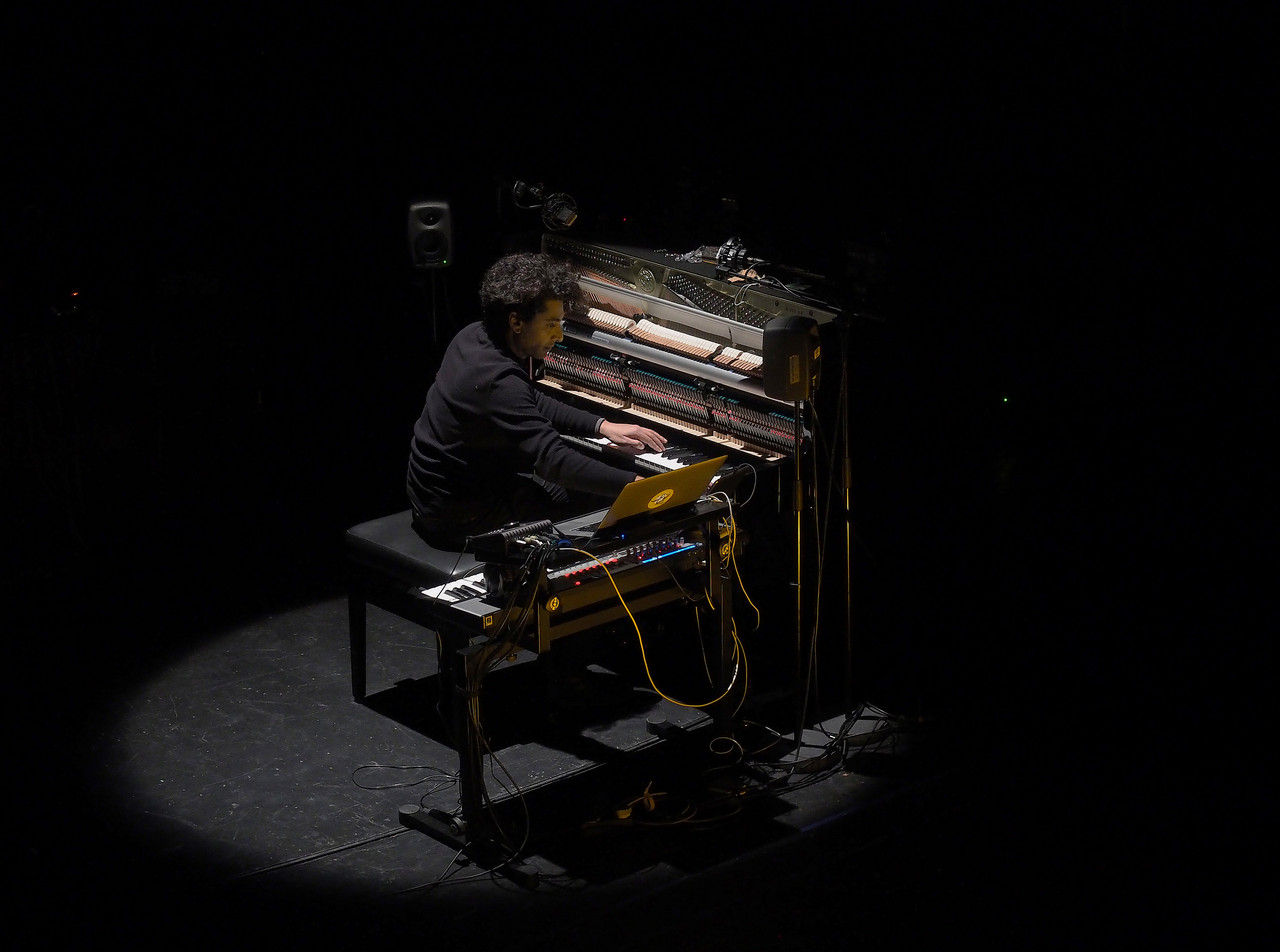
After years of research and study, I took things into my own hands and started developing Comma, the Max4Live device at the heart of my current work – fully aware that it itself is a workaround.
Kawalees: Part II, the microtonal virtual/acoustic piano project that I will present at CTM this year, was created using and is performed live with Comma – as are many of the other experiments I am working on at the moment. It is the culmination of my musical persistence (read: hard-headedness), and the result of a belief that things can be different.
Comma is designed to allow real-time tuning and real-time changing of tuning presets of any virtual instrument, sampler, or external hardware instrument. But it isn’t perfect.
Aside from the bugs, it currently only works for 12-tone octave repeating tunings, and the tuning data must initially be set manually. The other major issue is that it has to use MIDI Pitch Bend as a workaround for the actual microtuning (as do many other such solutions), which makes multi-voice or polyphonic applications a little cumbersome.
Regardless of these disadvantages, having Comma at my disposal has finally opened the door I have been banging on for many years. I am finally able to experiment and feel my way through ideas intuitively and creatively. The Arab maqam system I have been studying for the last 15 years is finally unlocked in unlimited timbres, colours and shades, allowing me to explore it in compositional and sonic ways I could only have dreamed of.
Anglo-European-Normativity and Multicultural Tokenism
Even though MIDI has provided the perfect technological foundations for the accurate support and implementation of complex tuning systems from across the world since 1992, it is still to this day neglected and misunderstood. I would even go as far as to say that the continued tokenistic inclusion of microtonal capabilities in contemporary music software unconsciously maintains the pervasion of Western orientalism in the fields of both culture and technology. It is precisely this latent indifference towards what is seen as »ethnic« and »exotic,« i.e. »other,« that continues to perpetuate a cultural asymmetry in the tools for cultural production, understanding, and engagement.
If MTS was fully accommodated and properly supported as its inventors Robert Rich and Carter Scholz had envisioned, I am certain that there would be a marked difference in the amount of non-hegemonic music available today. I am also certain that the progress and development of non-Western music would have been far less inhibited. And that cultural and individual identity in adventurous experimental music would not be limited to the First World.
Current Developments: MIDI 2.0
Surprisingly the MIDI specification officially remains at 1.0, despite having gained significant enhancements throughout the last 30+ years (its last significant update was in March 2017). But on November 6, 2018, the MMA announced that a major update was being planned, with many new companies joining, including Ableton and Native Instruments.
Apparently, this new update will include »in-demand options: auto-configuration, new DAW/Web integrations, extended resolution, increased expressiveness, and tighter timing – all while maintaining a high priority on backward compatibility.«24 It is most likely that this development is what will lead to a thorough adoption of MPE (MIDI Polyphonic Expression), the future of MIDI based controllers, as already seen in the likes of Roli’s Seaboard Rise. MPE essentially allows for every note to be treated independently, meaning every note can have its own CC values (mod, sustain, etc.), pitch bend, and so on. It is the ultimate method for allowing maximum musical expression in the programming or performance of digitally created music using MIDI controllers.
But what is the use of all these developments if the basics of certain musical concepts, such as tunings, and the needs of non-Western musics are so misunderstood, if not even systematically ignored?
Conclusion
As we have seen, the subject of tunings goes back millennia and includes very detailed and specific contributions from revered philosophers, theorists, physicists, mathematicians, scholars, engineers, composers, and musicians from Greece, China, Iraq, Iran, Germany, France, The Netherlands, England, America, and many more. In the 20th and 21st centuries it has been developed and studied in great depth, but sadly still remains elusive and shrouded in unnecessary mystery.
It must also be stated that the treatment and rendering of the subject is also overtly, if not exclusively, male-dominated. Aside from composers Elaine Walker, Jacky Ligon, and Ellen Arkbro, in all of my research on this topic I have come across very few female contributors to related theoretical or creative output.
Tuning is a subject that should be about the celebration of difference – of cultures, ideas, methods, opinions, and tastes. It should also be about the celebration of choice, the choice of individuals to sound however they please.
Modern technology, as much as it seems neutral and empowering, is heavily laden with cultural and political asymmetries that often go unnoticed and unchallenged. In the field of music, its hegemonic reality is destructive, though wrapped in bows of promised modernisation and advancement. Just as we are learning to become warier of gender and racial inequalities, we need also to attune our antennas to cultural inequality. A default »zero« for one culture does not necessarily mean the same for another.
And so we continue to persist, and to persevere in our persistence, towards the reverence of difference, of individuality, of fretlessness, and the acceptance that »we« should mean all – not some, and definitely not most.
- 1
A triangular figure consisting of ten points arranged in four rows: one, two, three, and four points in each row.
- 2
James Murray Barbour, Tuning and Temperament: A Historical Survey(Mineola: Dover Publications, 1951), ch. 4.
- 3
Cris Forster, Musical Mathematics: On the Art and Science of Acoustic Instruments (San Francisco: Chronicle Books, 2010), section 11.46, p. 611.
- 4
For a great summary, see Ross W. Duffin, How Equal Temperament Ruined Harmony (and Why You Should Care) (New York, NY: W. W. Norton, 2007).
- 5
A triangular figure consisting of ten points arranged in four rows: one, two, three, and four points in each row.
- 6
James Murray Barbour, Tuning and Temperament: A Historical Survey(Mineola: Dover Publications, 1951), ch. 4.
- 7
Cris Forster, Musical Mathematics: On the Art and Science of Acoustic Instruments (San Francisco: Chronicle Books, 2010), section 11.46, p. 611.
- 8
For a great summary, see Ross W. Duffin, How Equal Temperament Ruined Harmony (and Why You Should Care) (New York, NY: W. W. Norton, 2007).
- 9
www.midi.org/articles/midi-history-chapter-6-midi-is-born-1980–83
- 10
Ibid.
- 11
www.midi.org/articles-old/microtuning-and-alternative-intonation-systems
- 12
- 13
Reaper is the only exception, as far as I’m aware.
- 14
For an excellent discussion about this, see Douglas Keislar, Easley Blackwood, John Eaton, Lou Harrison, Ben Johnston, Joel Mandelbaum, and William Schottstaedt, »Six American Composers on Nonstandard Tunings,« Perspectives of New Music, 29(1) (1991), p. 176.
- 15
Alain Daniélou, Music and the Power of Sound: The Influence of Tuning and Interval on Consciousness (Rochester VT: Inner Traditions International, 1995), p. 247.
- 16
www.midi.org/articles/midi-history-chapter-6-midi-is-born-1980–83
- 17
Ibid.
- 18
www.midi.org/articles-old/microtuning-and-alternative-intonation-systems
- 19
- 20
Reaper is the only exception, as far as I’m aware.
- 21
For an excellent discussion about this, see Douglas Keislar, Easley Blackwood, John Eaton, Lou Harrison, Ben Johnston, Joel Mandelbaum, and William Schottstaedt, »Six American Composers on Nonstandard Tunings,« Perspectives of New Music, 29(1) (1991), p. 176.
- 22
Alain Daniélou, Music and the Power of Sound: The Influence of Tuning and Interval on Consciousness (Rochester VT: Inner Traditions International, 1995), p. 247.
- 23
- 24